






When a world‑class player like Daniil Medvedev declares, “I don’t want to play, I’ll call the physio,” the tennis world stops and listens. Recent matches have shown the Russian star stumbling, and French headlines reflect a growing curiosity about his form and mindset.
Medvedev’s Recent On‑Court Setbacks
European sports outlets reported that Medvedev “tripped” in a recent round, a phrasing that captures both a literal misstep and a broader dip in performance. At the Paris Masters, his second‑round defeat was marked by visible frustration; he told reporters he felt no desire to continue and summoned a physiotherapist. The episode has sparked debate about whether fatigue, injury, or mental pressure is driving the decline.
Medvedev, a former world No. 2 and 2021 US Open champion, is known for his flat groundstrokes and relentless baseline play. Over the past year his win‑loss record has slipped modestly, and his aggressive style makes him especially vulnerable to subtle physical issues that can disrupt timing.
How Medvedev Could Benefit from AI Coaching
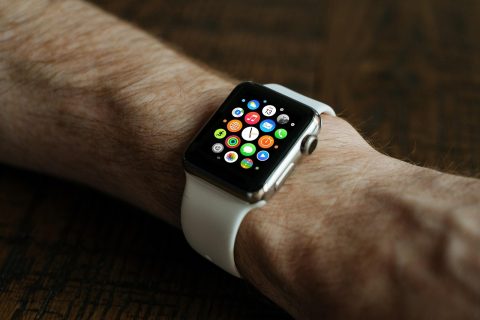
Artificial‑intelligence platforms now offer granular feedback that could address the exact problems Medvedev hinted at. Pose‑estimation algorithms analyze each foot placement, identifying a loss of balance that precedes a stumble. Coupled with biometric data from wearable sensors, the system can recommend specific recovery protocols before a player reaches a breaking point.
For a player of Medvedev’s caliber, AI can also refine tactical decisions. Machine‑learning models compare his shot selection against thousands of historical matches, suggesting when to vary pace or angle to keep opponents off‑balance. This data‑driven approach aligns with his analytical reputation and may restore confidence after a public display of doubt.
Key capabilities of current tennis AI solutions
- Movement tracking: High‑resolution cameras combined with pose‑estimation algorithms map a player’s every step, highlighting inefficiencies that may lead to injury.
- Performance forecasting: Predictive models analyze recent match trends to estimate a player’s likelihood of winning upcoming sets.
- Injury risk alerts: Wearable sensors feed data to AI that alerts coaches when a player’s load exceeds safe thresholds.
Applying these capabilities to Medvedev’s situation could explain why he appeared “very limited” in attitude during his loss. An AI‑driven post‑match report might reveal a spike in muscle fatigue, a subtle change in stride length, or a mental‑state shift detected through speech‑analysis software.
Recent studies show that integrating these data streams can reduce injury rates by up to 20 % in professional tennis, a statistic that would be especially valuable for a player who has publicly expressed reluctance to continue when discomfort arises.
AI Tools Changing Fan Experience Around Medvedev
Beyond coaching, AI is reshaping how fans consume tennis. Real‑time analytics dashboards overlay live video with shot‑speed meters, heat maps, and win‑probability graphs. For followers of Medvedev, this means a deeper understanding of why a particular rally ended in a stumble, turning a moment of frustration into an educational insight.
Some broadcasters now offer a “coach’s eye” mode, where viewers can toggle AI‑generated suggestions for shot selection in real time. When Medvedev’s serve speed drops unexpectedly, the system highlights optimal placement alternatives, turning passive watching into an interactive learning experience.
Social‑media platforms now use natural‑language processing to gauge audience sentiment after a match. The surge of French searches for “Medvedev attitude” reflects a measurable spike in engagement, which broadcasters can monetize through targeted ads and interactive features.
What the Challenger Scene Tells Us
While Medvedev wrestles with his own challenges, the Challenger circuit continues to produce fresh talent, as illustrated by the Damm‑Gentzsch match in Bratislava. The same AI tools that assess top‑tier players are now being deployed at the Challenger level, giving rising stars data‑driven coaching that can accelerate their development. This democratization means that the performance gap between elite and up‑and‑coming players may narrow, potentially reshaping future draws where Medvedev competes.
Scouting departments are also leveraging AI to evaluate Challenger performances. Algorithms compare a newcomer’s rally patterns to those of established stars like Medvedev, identifying potential future rivals and informing tournament seedings.
Practical Steps for Players and Coaches
If you’re a coach, athlete, or even an avid fan wanting deeper insight into a player’s form, consider integrating the following AI‑focused practices:
- Adopt video‑analysis platforms that automatically generate heat maps of shot placement and movement patterns.
- Use wearable tech that syncs with cloud‑based analytics to monitor workload and recovery cycles.
- Leverage natural‑language processing tools to assess interview transcripts for stress indicators.
These steps not only help address immediate concerns—like the ones Medvedev voiced—but also build a long‑term strategy for maintaining peak performance.
Looking ahead, generative‑AI models may produce personalized training drills, simulating match scenarios that target a player’s specific weaknesses. Early adopters could gain a competitive edge as the technology matures.
In summary, Medvedev’s recent public statements and on‑court difficulties have put a spotlight on the intersection of elite sport and artificial intelligence. As AI tools become more sophisticated and accessible, they promise to transform how players diagnose issues, plan training, and engage with fans who crave transparent, data‑rich narratives.
— This article is based on publicly reported information at the time of writing.
Source: Eurosport