







When Amulya Vishwanath, a former head of product marketing for Nvidia’s robotics platforms, stepped into venture capital, he didn’t claim that robots are about to explode onto the scene like ChatGPT did for language models. Instead, he warned that the field is still stuck in a “Lego era”—a period of assembling basic building blocks before a true breakthrough can happen.
Why the Nvidia insider‑turned‑VC sees a gap between robotics and ChatGPT
Vishwanath’s perspective is rooted in seven years of hands‑on work at Nvidia, where he oversaw the development of hardware and software stacks for autonomous machines. He argues that, unlike large language models that could be trained on massive text corpora and released as a single API, robotics still requires a fragmented ecosystem of actuators, sensors, control algorithms, and safety certifications.
In the AI world, the “foundation model” approach works because the same model can be fine‑tuned for many downstream tasks. For robots, a comparable foundation would need to understand physics, real‑time perception, and manipulation—all while obeying strict safety standards. Those pieces are not yet mature enough to be bundled into a single, universally applicable model.
What the “Lego era” means for developers and investors
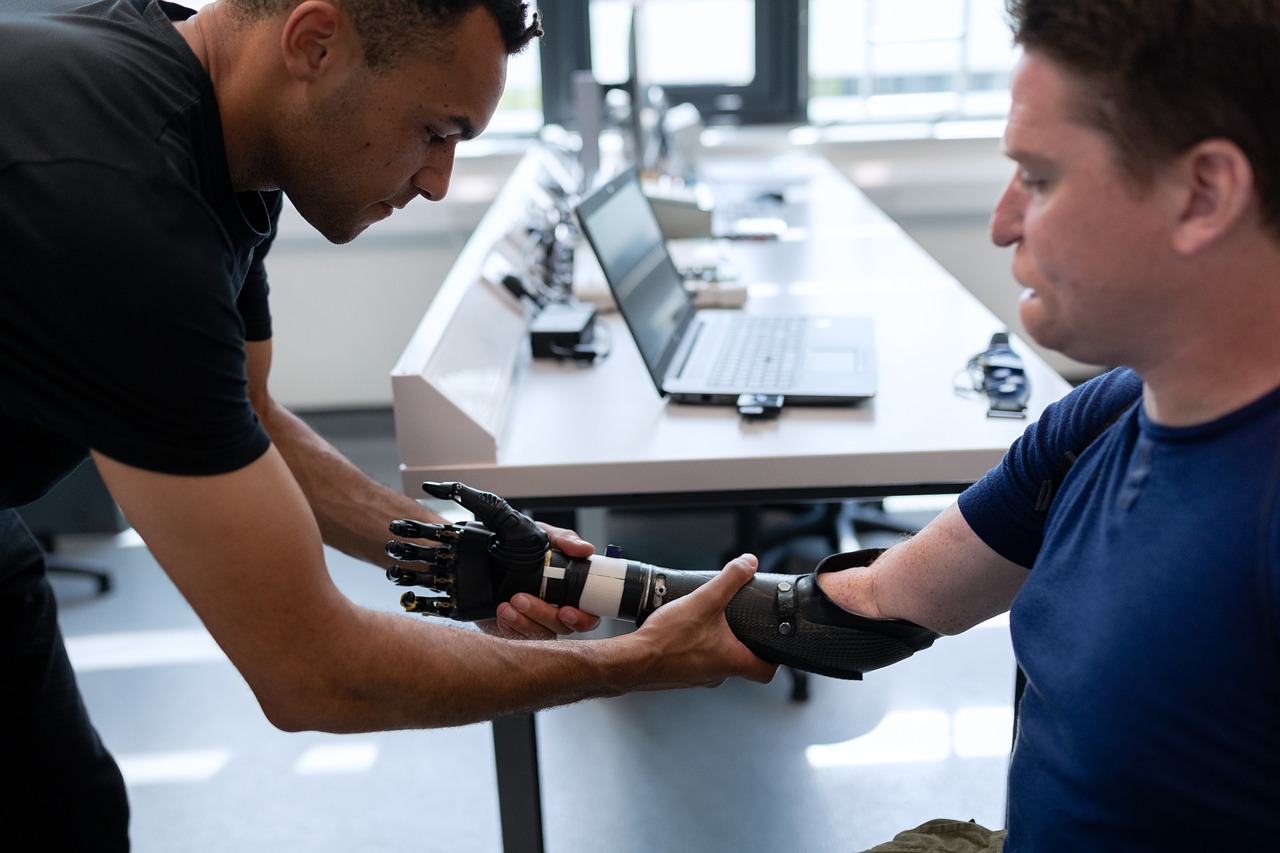
The analogy to Lego bricks highlights that current robotics research is focused on standardising components. Companies are busy redesigning actuators that are more precise, creating dexterous robotic hands, and writing middleware that can translate high‑level commands into low‑level motor actions.
- Actuators: more compact, higher torque, lower power consumption.
- Robotic hands: multi‑fingered designs that mimic human grip.
- Software frameworks: open‑source stacks such as ROS 2 that aim to unify perception and control.
- Safety standards: emerging regulations that dictate how robots can operate around humans.
From an investment standpoint, Vishwanath sees opportunities in firms that solve these sub‑problems rather than those that promise a one‑size‑fits‑all AI robot. “The market is still building the Lego pieces,” he says, “and that creates a fertile ground for specialized startups.”
Why public interest in the topic is rising now
Search trends show a spike in queries about “robotics ChatGPT” and “Nvidia robotics VC”. The surge is driven by two factors. First, large language models have demonstrated dramatic capabilities in just a few months, raising expectations that similar rapid progress could happen in robotics. Second, Nvidia’s recent announcements about AI‑accelerated hardware have kept the company in the spotlight, prompting observers to wonder whether its expertise will finally translate into a robotics breakthrough.
However, Vishwanath cautions that the hype cycle can be misleading. While generative AI can produce text, images, or code without new hardware, robots must physically interact with the world, which imposes latency, power, and reliability constraints that are not easily solved by scaling compute alone.
In short, the excitement is understandable, but the underlying technical challenges keep robotics from reaching a ChatGPT‑like inflection point. The field is still aligning its “Lego bricks”—standardising parts, safety protocols, and software interfaces—before a universal model can be layered on top.
As venture capital continues to flow into AI, investors who heed Vishwanath’s assessment may focus on companies that are solidifying the foundational components. Those that can deliver a reliable, modular stack are likely to become the building blocks for the next generation of intelligent machines.
This article is based on publicly reported information at the time of writing.