







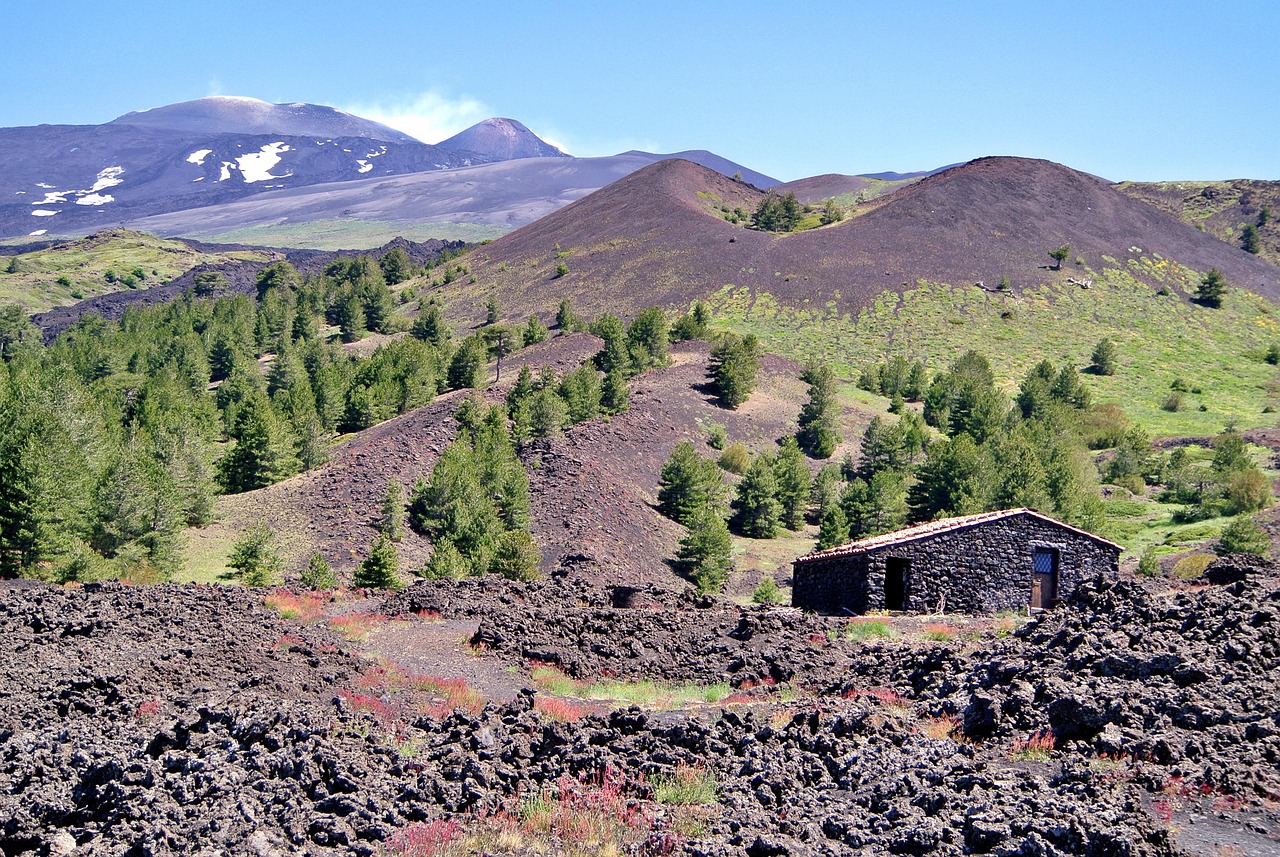
Earthquake Activity at Campi Flegrei
A shallow earthquake of magnitude 2.3 was recorded near the town of Pozzuoli, part of an ongoing seismic swarm in the Campi Flegrei volcanic area. The tremor was detected by local seismometers and reported by Italian media on 27 October. Although the magnitude is modest, the event is notable because it follows a series of three distinct shakes that occurred within a few minutes, a pattern typical of a swarm rather than an isolated quake.
Why the Earthquake Swarm Is Capturing Online Attention
Search interest has risen as the event coincides with real‑time data feeds from Italy’s civil protection network, which are shared on social platforms and specialized mobile apps. Tech‑savvy users can view the quake’s parameters instantly, turning a routine geological occurrence into a digital trending topic. The convergence of geophysical data and online distribution explains why the term “earthquake” is trending in IT‑related searches.
Background on the Caldera
Campi Flegrei is a large, partially submerged caldera located west of Naples. It spans roughly 12 kilometers in diameter and sits atop a complex system of magma chambers. Historically, the area has experienced both explosive eruptions and periods of intense seismicity, prompting continuous monitoring by the Italian National Institute of Geophysics and Volcanology (INGV).
The current swarm is not the first recent episode. In the past decade, the caldera has produced dozens of low‑magnitude earthquakes, often grouped in clusters that last from a few hours to several days. While most of these events do not lead to larger eruptions, scientists treat each swarm as a potential indicator of changes in subsurface pressure.
Historical Earthquake Patterns in Campi Flegrei
Records dating back to the 19th century show that Campi Flegrei experiences frequent micro‑earthquakes, many of which go unnoticed by the general public. The most significant historical episode occurred in 1982‑1984, when a series of tremors accompanied ground uplift of several centimeters, raising concerns about a possible eruption.
Since then, advances in instrumentation have allowed researchers to detect events as small as magnitude 0.5. This high‑resolution monitoring has revealed that seismic swarms often precede episodes of ground deformation, though a direct causal link to eruptive activity remains uncertain.
Implications for Residents and Infrastructure
For the population of Pozzuoli and surrounding municipalities, a magnitude‑2.3 quake is generally perceived as a light vibration, unlikely to cause structural damage. Nonetheless, local authorities maintain a precautionary stance, reminding citizens to follow standard safety procedures, such as securing heavy objects and staying away from unstable slopes.
Critical infrastructure, including the nearby port and the dense railway network that serves the Naples metropolitan area, is designed to withstand low‑level seismic events. Continuous monitoring ensures that any abnormal stress accumulation can be addressed before it threatens public safety.
How Technology Enhances Earthquake Reporting
Modern seismic networks rely on broadband sensors, satellite communication links, and automated alert algorithms. Data streams are processed in near real‑time on cloud platforms, where machine‑learning models filter noise and highlight anomalous patterns.
Mobile applications aggregate this information, delivering push notifications to users within seconds of an event. Open‑source platforms also enable citizen scientists to upload felt reports, enriching the official dataset and improving the spatial resolution of the shaking map.
International Interest and the Role of IT
Beyond Italy, the earthquake swarm has attracted attention from global monitoring services such as the United States Geological Survey (USGS) and the European-Mediterranean Seismological Centre (EMSC). These agencies rebroadcast the Italian data through their own APIs, allowing developers worldwide to integrate the information into dashboards, early‑warning systems, and research tools.
The convergence of geoscience and information technology creates a feedback loop: as more people access live seismic data, demand for faster, more reliable delivery grows, prompting further investment in sensor networks and data‑processing pipelines.
This article is based on publicly reported information at the time of writing.
Source: Sky TG24